
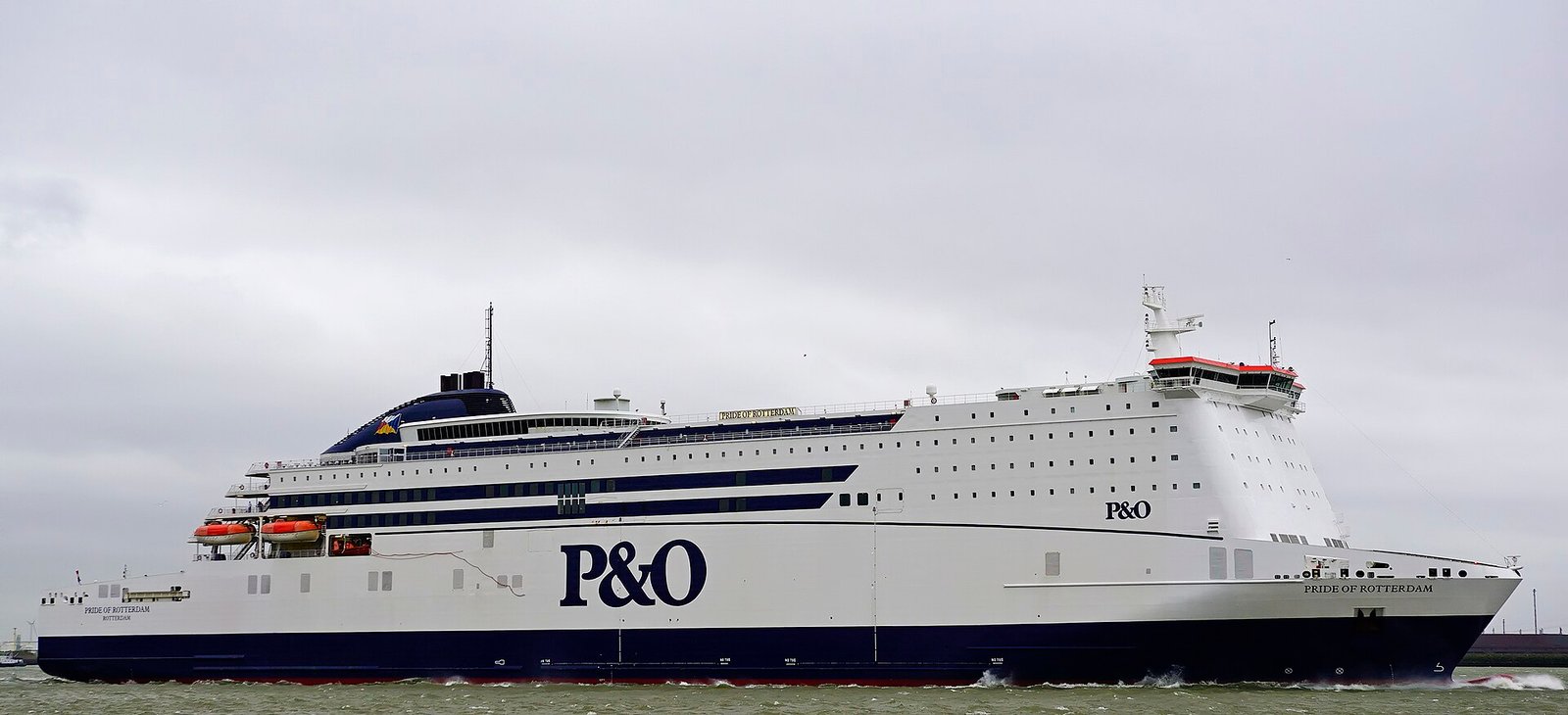
Covering hundreds of kilometres while you sleep, completely free from traffic jams
Rotterdam – Despite Europe’s extensive road and rail network, long-distance ferry services remain as popular as ever. This is particularly true for routes that allow truck drivers to spend their mandatory daily rest period on board. One of the best-known examples is the popular P&O Ferries service between Rotterdam and Hull, which takes approximately twelve hours.
587 words – 3 minutes read time
While passengers travelling from Calais or Dunkirk to Dover can reach the UK much faster, the situation is different for freight transport. European driving and rest-time regulations require truck drivers to take a minimum daily rest period of eleven hours within every 24-hour period. A ferry crossing lasting between ten and twelve hours fits almost perfectly within those regulations, reducing downtime while allowing drivers to begin the next stage of their journey fully rested.
Europe’s Five Most Popular Rest-Time Ferry Routes
According to Havendata, these are five of the most popular ferry routes with crossing times between 10 and 12 hours.
- P&O Ferries: Rotterdam (Netherlands) – Hull (United Kingdom) Crossing time: 12 hours Frequency: Daily
- Corsica Ferries: Savona (Italy) – Bastia (Corsica, France) Crossing time: 12 hours Frequency: Four sailings per week
- Fjord Line: Hirtshals (Denmark) – Stavanger (Norway) Crossing time: 12 hours Frequency: Daily
- TT-Line: Travemünde (Germany) – Karlshamn (Sweden) Crossing time: 11 hours Frequency: Six sailings per week
- Tallink Silja Line: Turku (Finland) – Stockholm (Sweden) Crossing time: 12 hours Frequency: Six sailings per week
Eemshaven, IJmuiden and Hoek van Holland
New Northern European ferry connections are also being explored in the Dutch port of Eemshaven. Preparations are underway on the West Pier after Norwegian operator Njordic Ferry Lines expressed interest in launching a regular service between Eemshaven and Arendal in Norway. The distance between the two ports is more than 570 kilometres in a straight line. According to Groningen Seaports, it remains uncertain whether the route will actually be introduced. If the project moves forward, the crossing is expected to take between 18 and 20 hours.
The DFDS service between IJmuiden and Newcastle is not included in the above list because the crossing takes approximately sixteen hours. Likewise, the Stena Line route between Hoek van Holland and Harwich is excluded. With a sailing time of around eight hours, the journey is too short to fully cover a driver’s mandatory daily rest period.
Zeebrugge and Antwerp
Although Flanders occupies a leading position within the European roll-on/roll-off market, there is currently no direct passenger ferry connection between Belgium and the United Kingdom, or indeed any other country. As a result, the travel options available to pedestrians, cyclists, motorcyclists and motorists are more limited than those offered in Rotterdam.
P&O Ferries operated its final sailing between Zeebrugge and Hull on 1 January 2021. The service took approximately twelve hours and was popular with both freight operators and holidaymakers. Earlier, in 2013, the ferry route between Ostend and Ramsgate also disappeared when Transeurope Ferries ceased operations. The service faced intense competition from the much shorter crossings between Calais, Dunkirk and Dover.
As cooperation between the ports of Antwerp and Zeebrugge continues to expand, industry observers are increasingly speculating about the possible return of a ferry connection to Northern England. The biggest challenge remains the availability of suitable vessels capable of transporting large numbers of freight trucks.