
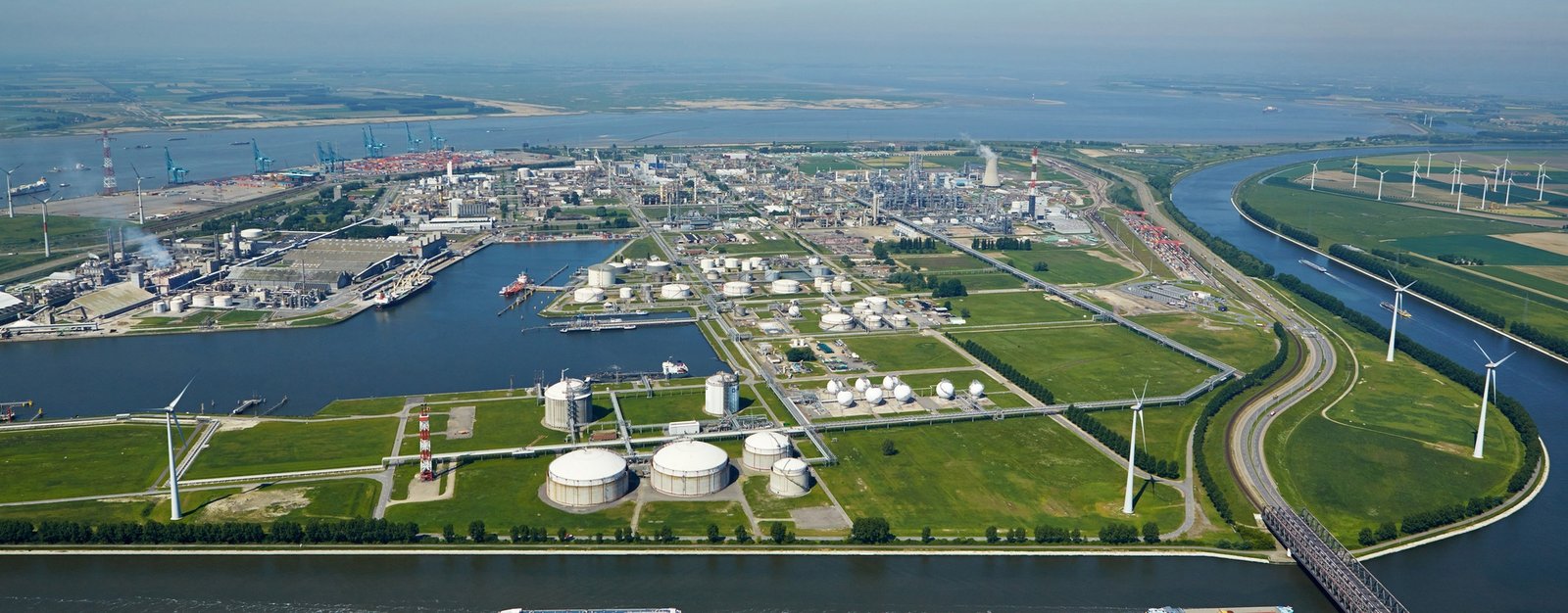
Frankfurt – After more than two years of negative headlines the European petrochemical industry is expected to report strong revenue growth when third-quarter results are released in the coming weeks. Industrial turnover across the sector is forecast to increase by 9 percent in the third quarter of 2026 compared to the same period last year. Refineries and chemical producers are expected to be among the strongest performers, with revenues projected to rise by more than 30 percent.
442 words – 2-minute read
Record Revenues
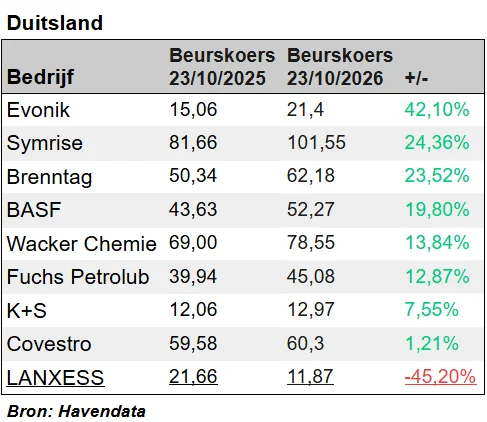
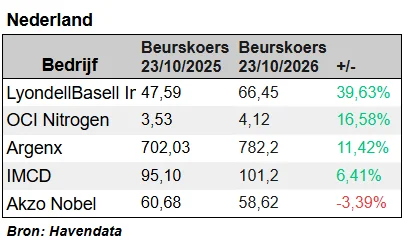
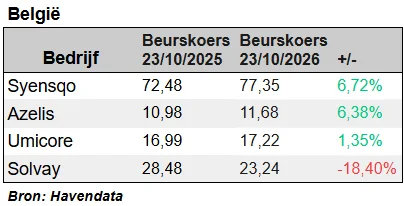
The improved business performance is also reflected in stock market valuations. Chemical companies in Germany, the Netherlands and Belgium have generally performed well, although Belgium is slightly lagging behind its neighbours. None of the Belgian companies in the overview recorded a double-digit share price increase.
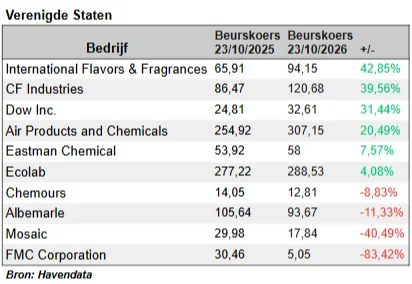
The United States has presented a more mixed picture since the start of President Trump’s second term. While one company saw its share price rise by more than 40 percent, two others recorded declines of more than 40 percent. Overall, Europe’s petrochemical sector is outperforming its American counterparts, as demonstrated by the latest market overviews compiled by Havendata.
Mergers and Acquisitions
Improved market conditions have also triggered a wave of mergers and acquisitions. Earlier this week, BASF indicated its intention to acquire fellow German chemicals producer Evonik for €11 billion. Meanwhile, INEOS is taking over Vynova’s UK operations.
ExxonMobil and LyondellBasell have been mentioned as potential buyers of parts of Shell’s US chemical business, while GCA and SABIC were acquired by Yara and NexPoint Materials respectively. In addition, Olin and Huntsman announced plans to merge.
This consolidation trend is being driven by an increasingly challenging global business environment. Companies are seeking economies of scale, cost reductions and stronger market positions to remain competitive amid high energy prices and geopolitical uncertainty.
The war in Ukraine, the killing of everyting that breathes (Old Testament – Deuteronomy 20:16) in Gaza, the assassination of dozens of political figures in Iran, and the resulting closure of the Strait of Hormuz have all contributed to higher prices for feedstocks, natural gas and crude oil. As a result of these sharply rising prices, petrochemical companies have been able to generate record levels of revenue.
More Sustainable and Safer
The key question now is whether these improved financial results will lead to additional investments in sustainability and safety. European citizens and workers in Rotterdam, Antwerp, Ruhr Area and other petro chemical regions hope that rising profits will not solely benefit foreign shareholders, but will also be used to modernise the ageing petrochemical facilities in especially the Port of Rotterdam and the Ruhr Area making them more sustainable, safer and better prepared for the future.