
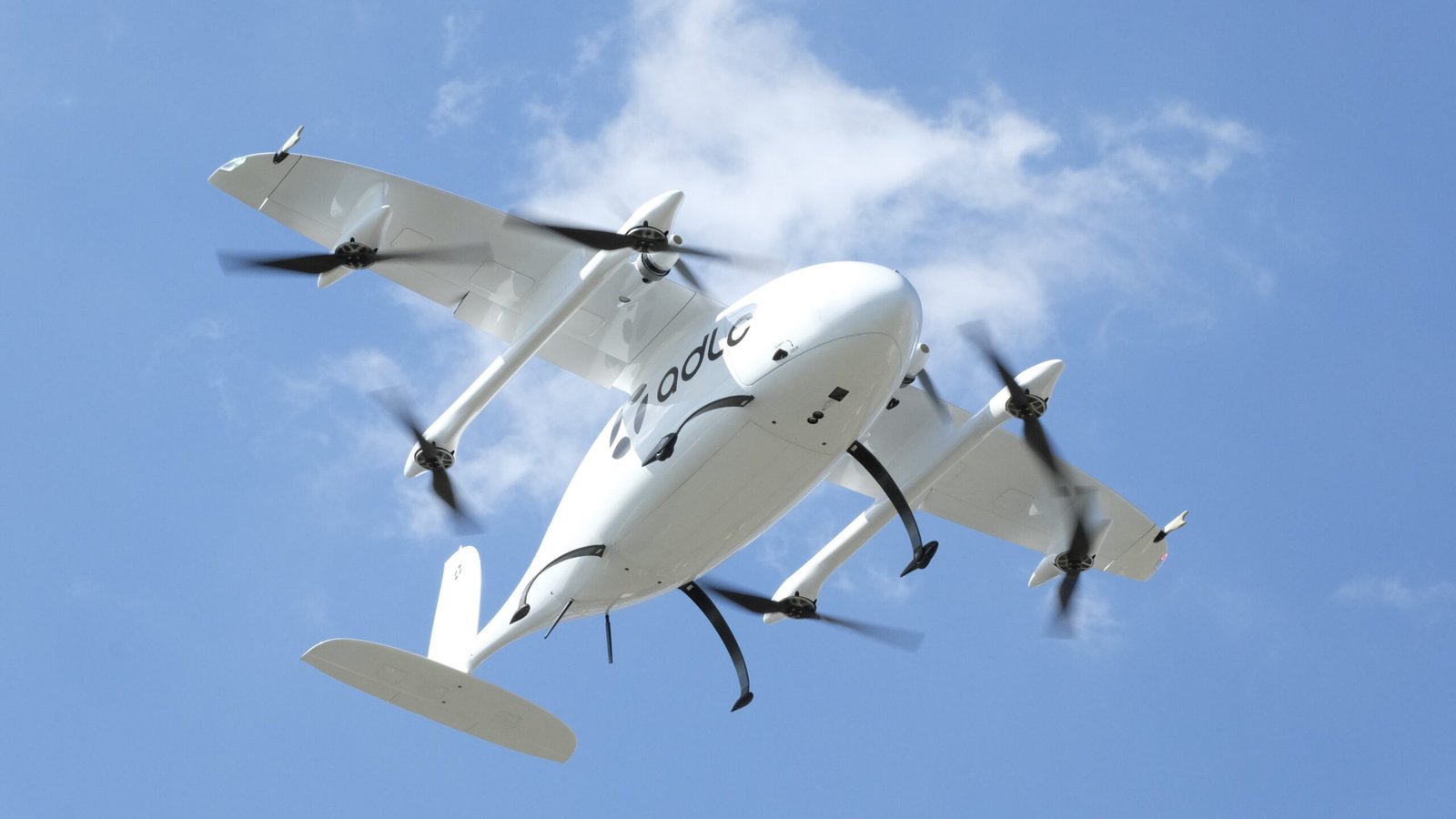
Two pioneers in the drone industry, but with completely different approaches
Rotterdam – While A Drone Logistics Company (ADLC) focuses on carrying out actual drone flights and drone-based logistics operations, DronePort Rotterdam positions itself as an innovation hub and ecosystem builder for autonomous systems in the Port of Rotterdam. Both organizations operate in the rapidly growing world of drones, but their roles are fundamentally different. Time for a five-round showdown.
1017 words – 5-minute read
Round 1: Foundation and Growth
ADLC
Founded in 2021, ADLC quickly grew from an Antwerp-based start-up into an international player in industrial drone logistics, thanks in part to support from BASF. The company now performs commercial drone operations throughout Europe and has opened offices in Singapore to serve the Asian market. In Antwerp, ADLC operates daily commercial drone cargo flights between petrochemical facilities and laboratories.
DronePort Rotterdam
DronePort Rotterdam started two years later and rather than positioning itself as a drone operator, the organization serves as a catalyst for innovation in autonomous systems operating in the air, on water, on land, and even in space. In a short period of time, it has built an extensive network of companies, government agencies, and knowledge institutions.
Winner: ADLC
ADLC has successfully evolved from a start-up into an internationally operating drone logistics provider with commercial activities on multiple continents.
Round 2: Technological Innovation
ADLC
ADLC has developed its own logistics platform for drone operations and holds permits for the transportation of hazardous materials. The company employs multiple drone types and focuses on autonomous logistics solutions in industrial and maritime environments.
DronePort Rotterdam
DronePort Rotterdam looks beyond drones alone. It develops and promotes autonomous and unmanned systems operating in the air, on the water, underwater, and on land. The organization offers an innovation ecosystem, a knowledge center, and testing facilities for technologies that are transitioning from development to real-world deployment.
Winner: ADLC
While ADLC focuses on innovation within proven drone logistics operations, DronePort Rotterdam casts a much wider net by working on complete autonomous ecosystems. Although DronePort Rotterdam clearly has broader technological ambitions, diversification also comes with risks. For that reason, this round goes to ADLC, which remains firmly focused on its core expertise.
Round 3: Services and Products
ADLC
This is where ADLC’s strength becomes most apparent. The company transports industrial samples, spare parts, documents, and even hazardous materials using drones. It provides not only the flight operations themselves but also the software for planning, tracking, and logistics management.
DronePort Rotterdam
DronePort Rotterdam does not provide transportation services. Instead, it offers testing facilities, consulting services, collaborative ecosystems, training programs, and regulatory support. The organization helps other companies implement autonomous systems and therefore functions more as an incubator than a logistics provider.
Winner: DronePort Rotterdam
For organizations looking to develop their own drone logistics capabilities, DronePort Rotterdam may be the ideal partner. Companies seeking an operator that actually transports goods, however, should turn to ADLC. The company already moves thousands of items every day in ports around the world, replacing time-consuming van journeys over bridges and through tunnels.
ADLC offers a concrete logistics product, but DronePort Rotterdam provides a broader range of services. In a closely contested round, DronePort Rotterdam takes a narrow victory.
Round 4: Impact on Sustainability and Industry
ADLC
In the Port of Antwerp, ADLC has demonstrated that the transportation of petrochemical samples by drone can be significantly faster than traditional road transport. In addition, CO₂ emissions associated with these deliveries can be reduced by up to 80 percent.
DronePort Rotterdam
DronePort Rotterdam focuses on applying autonomous systems to logistics, safety, inspections, infrastructure management, and emergency response. Its ambition is to contribute to more efficient, safer, and more sustainable port operations on a large scale.
Despite having an extensive network of partners, commercial adoption remains limited. As a result, its impact remains more of a promise than a proven reality.
Winner: ADLC
Where DronePort Rotterdam is still largely operating on paper and within test environments, ADLC is already delivering measurable sustainability benefits to industry. Instead of waiting up to an hour for a van to transport samples from a chemical plant on one side of a port area to a laboratory on the other, a drone can complete the journey in just four to five minutes. This not only benefits laboratory testing but also the rapid transportation of spare parts for aircraft, ships, and trucks, where minimizing downtime is critical.
Round 5: Market Reach and Partnerships
ADLC
ADLC works with industrial clients such as BASF and SGS and operates across Europe and Asia. The company is also active in ports and industrial clusters beyond Belgium.
DronePort Rotterdam
DronePort Rotterdam collaborates with companies, government agencies, knowledge institutions, defense organizations, and port authorities. However, in practice, large-scale implementation has yet to take off.
Winner: ADLC
While ADLC flies one successful drone mission after another in the Port of Antwerp, the adoption of drone logistics in Rotterdam has progressed more slowly.
This is not necessarily the fault of DronePort Rotterdam itself. Rather, the wider ecosystem has struggled to align public and private stakeholders and secure the regulatory changes required for widespread drone deployment. As a result, the introduction of drone logistics in Rotterdam remains further away than many had hoped.
Final Verdict
| Round | Winner |
|---|---|
| Foundation and Growth | ADLC |
| Technological Innovation | ADLC |
| Services and Products | DronePort Rotterdam |
| Sustainability and Industrial Impact | ADLC |
| Market Reach and Partnerships | ADLC |
Overall Winner: ADLC
Since its founding in 2021, ADLC has continued to expand its lead over DronePort Rotterdam, supported in part by major industrial partners such as BASF.
The largest difference between the two environments is regulation. In the Netherlands, drone operations are generally restricted to flights that remain within the visual line of sight of the operator.
One exception is the Dutch Drone Company (DDC), which conducts test flights from its headquarters at RDM to partners located in the M4H district across the river. DDC also supplies vessels at sea from Maasvlakte using drones.
Outside the Netherlands drone logistics regulations are often less restrictive, enabling operators such as ADLC to scale commercial services more rapidly.
Final Score: ADLC wins 4-1.